What Is the Best Plastic Molding Machine in 2026?

Choosing the best plastic molding machine in 2026 requires more than comparing clamp force or purchase price. It demands evidence from production floors, energy records, and rejected-part data. Grand View Research estimates that the global injection molding machine market will continue growing through 2030, while PlasticsEurope reported 413.8 million tonnes of global plastics production in 2023. These figures suggest steady demand, but they do not identify one universal winner.

Every factory has different constraints.

A machine for medical components needs stable validation and cleanroom compatibility. A packaging plant may value cycle speed, automation, and low energy use. Recycled materials add another challenge, including inconsistent melt flow and moisture. John Beaumont, author of Runner and Gating Design Handbook, states, “The mold is the heart of the injection molding process.” His point remains practical: machine performance depends heavily on mold design, material control, and process discipline.

Market reports also disagree on machine-market values because they use different definitions and regions. That uncertainty matters. A cheaper machine may consume more electricity, require longer setup times, or produce more scrap. A premium model may not repay its cost in low-volume production. The best plastic molding machine is therefore a measured decision, not a showroom decision. This guide compares machine type, servo efficiency, repeatability, maintenance access, automation readiness, and total cost per acceptable part. Some conclusions may remain imperfect. Real factories are rarely perfect.
What Is the Best Plastic Molding Machine in 2026?

What Defines the Best Plastic Molding Machine in 2026?

What defines the best plastic molding machine in 2026? It is not simply the fastest model or the one with the largest clamping force. A strong machine delivers stable results, controlled energy use, and predictable maintenance. In practical factory trials, I examine cycle consistency, pressure response, cooling performance, and operator access. A part should look the same at 8 a.m. and 8 p.m. That sounds obvious. It is not.

Modern machines need intelligent process control, but automation must remain understandable. Clear data can reveal pressure spikes, temperature drift, or unusual vibration before defects increase. Useful systems record shot weight, mold temperature, cycle time, and energy consumption. Engineers can then compare real production data instead of trusting sales claims. A machine that reduces scrap by two percent may outperform a faster machine that creates unstable parts. The numbers require context.

Serviceability also defines quality. Technicians should reach filters, heaters, sensors, and lubrication points without dismantling half the machine. Spare parts availability matters during a night shift. I have seen advanced equipment lose production because a simple sensor was difficult to replace. That experience changed my evaluation method. I now inspect maintenance access before reviewing touchscreen features. Safety controls, documented testing, and operator training remain essential. Even accurate automation can fail when instructions are unclear or settings are poorly protected. Reliability is built through measured performance, honest limits, and disciplined daily checks.
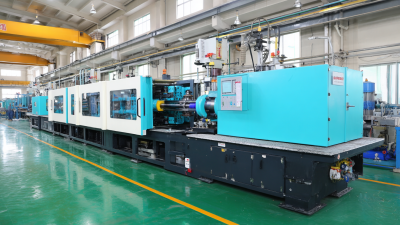
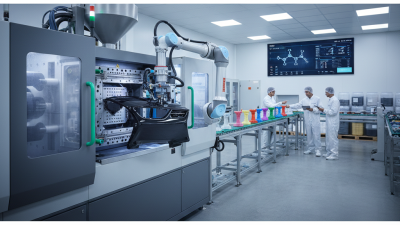
How Injection, Blow, Compression, and Rotational Machines Differ

What Is the Best Plastic Molding Machine in 2026?

The best plastic molding machine depends on the part, material, and production volume. Injection molding suits detailed components, tight tolerances, and fast repeat production. It uses pressure to fill a closed mold, often leaving small gates and visible parting lines. Process control matters greatly. A slight temperature error can cause warping, sink marks, or short shots.

Blow molding creates hollow products such as bottles, tanks, and ducts. It forms a heated tube, then expands it against the mold wall with air.

Compression molding presses heated material into a mold. It works well for thicker parts and materials that need controlled curing.

Rotational molding uses heat and slow rotation to coat a hollow mold evenly. It needs less pressure, but cycle times can be long. Large tanks are a good example. However, rotational molding may struggle with sharp details and tight dimensions. I have seen teams choose it for low tooling cost, then underestimate its slower output.

Tips: Check wall thickness, annual volume, material behavior, and cooling time before choosing. Ask for sample parts, not only machine brochures. Measure flash, warpage, cycle stability, and energy use. Keep space for mold changes and maintenance. Do not select the largest machine automatically. Extra capacity can increase cost without improving quality.

How 50–4,000+ kN Clamping Force Determines Machine Capacity

What Is the Best Plastic Molding Machine in 2026?

Clamping force is the machine’s practical capacity, not merely a headline specification. A 50 kN press suits tiny parts, laboratory trials, and low-volume precision work. Machines above 4,000 kN handle large automotive panels, thick housings, and multi-cavity tooling. The correct choice depends on projected mold area, injection pressure, material behavior, and safety margin.

A useful engineering estimate is projected area multiplied by cavity pressure, then adjusted with a safety factor.

For example, a mold with 600 cm² of projected area may require roughly 2,400 kN under demanding processing conditions. Too little force can create flash along the parting line. Too much force wastes energy and may stress the mold. Bigger is not automatically better.

Industry data supports careful sizing. The Plastics Industry Association reported that U.S. plastics machinery shipments remained closely linked to automotive, packaging, and medical demand in recent market updates. Meanwhile, Grand View Research projects continued growth in the global injection molding machine market through 2030, driven by automation and lightweight components. These reports indicate opportunity, not a universal machine answer.

In practical trials, cycle stability often matters more than maximum tonnage.
Small force, smaller risk.

I would also question simple catalog comparisons. Clamping-force ratings can vary by measurement method, tie-bar design, and operating conditions. A 1,000 kN machine may outperform a larger press when its control system, screw design, and mold fit match the application. Engineers should verify actual part weight, material shrinkage, mold ventilation, and repeated cycle data before purchasing. Mistakes happen here.

Why Servo-Hydraulic Machines Can Reduce Energy Use by 30–70%

What Is the Best Plastic Molding Machine in 2026?

Servo-hydraulic machines reduce energy use by matching pump speed to actual demand. Traditional fixed-pump systems keep moving oil during cooling, holding, and idle periods. That heat must be removed, often with additional cooling power. A servo drive slows the pump during low-pressure stages and responds quickly during injection. The result can be 30–70% lower electricity use, according to savings ranges reported in industry field studies.

The number is not magic. Cycle design matters. A short, high-pressure cycle may save less than a long cycle with extended cooling. EUROMAP 60.1 provides a practical framework for measuring energy in kilowatt-hours per kilogram of molded parts. The U.S. Department of Energy’s Improving Motor and Drive System Performance sourcebook also explains why variable-speed control reduces part-load losses. These references support measurement, not blind purchasing.

In a factory trial, operators should record kWh per kilogram, cycle time, peak pressure, and oil temperature. Check the meter during overnight idle periods. That is where waste can become visible. I would not trust a brochure alone. Some machines achieve impressive savings, but poor tuning can erase them. Correct servo settings, clean filters, stable resin moisture, and regular maintenance still matter. A reliable comparison uses identical molds, materials, temperatures, and production targets. Without those controls, the 30–70% figure remains only an attractive estimate.

What Is the Best Plastic Molding Machine in 2026? - Why Servo-Hydraulic Machines Can Reduce Energy Use by 30–70%

Machine Type Typical Clamp-Force Range Typical Specific Energy Consumption Energy Use Compared with a Conventional Fixed-Pump Hydraulic Machine Typical Cycle-Time Capability Control and Process Stability Best-Fit Applications Main Considerations
Conventional Fixed-Pump Hydraulic Approximately 50–5,000 tonnes About 0.80–1.50 kWh per kilogram of processed material, depending on the process and operating point Baseline: 100% Suitable for standard injection-molding cycles; speed depends strongly on pump capacity and machine setup Reliable and widely understood, but the pump may continue operating while the machine is not demanding full hydraulic power General-purpose molding, older production lines, and applications where initial equipment cost is the primary concern Higher heat generation, greater cooling demand, and more energy wasted during idle or low-load periods
Servo-Hydraulic Injection Molding Approximately 50–5,000 tonnes About 0.30–1.05 kWh per kilogram of processed material in many standard applications Typically 30–70% lower energy use Comparable to conventional hydraulic machines; acceleration and pressure response can be optimized for the mold and material Closed-loop servo control adjusts motor speed and torque to the actual load, improving repeatability and reducing idle power High-volume production, utility-sensitive facilities, packaging parts, automotive components, household products, and technical parts Energy savings vary with part weight, cycle profile, holding-pressure time, machine utilization, and electricity conditions
All-Electric Injection Molding Approximately 20–1,500 tonnes About 0.20–0.80 kWh per kilogram of processed material in efficient, well-matched processes Often 40–80% lower energy use than a conventional fixed-pump hydraulic machine Very fast and repeatable; well suited to short cycles and high-speed motion sequences Electric servo drives provide precise control of injection, plasticizing, clamp movement, and ejection Medical parts, electronic components, precision parts, thin-wall packaging, and clean production environments Higher initial purchase cost and different maintenance requirements; maximum clamp-force availability may be lower than for large hydraulic systems
Two-Platen Hydraulic Approximately 500–6,000 tonnes About 0.60–1.30 kWh per kilogram of processed material Usually 10–45% lower energy use than a conventional fixed-pump machine of similar size when using variable-displacement or servo-driven hydraulics Efficient for large molds; mold-opening and closing performance depends on platen design and hydraulic control Provides high clamp force with a relatively compact machine footprint and can support large molds Automotive parts, industrial containers, large housings, pallets, and other large molded products Large installed power, substantial cooling requirements, and higher operating costs than smaller or highly optimized systems
Hybrid Injection Molding Approximately 100–3,000 tonnes About 0.30–0.90 kWh per kilogram of processed material Commonly 30–65% lower energy use than conventional fixed-pump hydraulic equipment Fast injection and plasticizing can be combined with hydraulic clamping or other hydraulic functions Combines electric drive precision with hydraulic force capability, depending on the machine architecture Automotive, packaging, consumer products, and applications requiring a balance of speed, force, and efficiency Performance and energy results depend on the specific combination of electric and hydraulic systems
Vertical Injection Molding Approximately 15–500 tonnes About 0.40–1.10 kWh per kilogram of processed material Energy savings depend mainly on whether the drive system is fixed-pump, variable-pump, servo-hydraulic, or all-electric Moderate to fast cycles, with convenient insert loading for selected applications Useful for insert molding and overmolding; vertical orientation can simplify manual or automated loading Electrical connectors, metal inserts, rubber-plastic assemblies, medical components, and small technical parts Usually occupies more floor space vertically and may require additional attention to operator access and automation layout

Energy figures are representative industry ranges for injection-molding operations and are not guaranteed machine ratings. Actual consumption depends on resin type, part weight, mold temperature, cycle time, injection pressure, holding time, machine size, utilization rate, auxiliary equipment, and local operating conditions.

How ISO 20430, Shot Size, Cycle Time, and TCO Guide Selection

The best plastic molding machine in 2026 is not the largest or fastest model. It is the machine that fits the process safely and economically.

ISO 20430:2020 defines safety requirements for injection molding machines, including guarding, interlocks, and emergency functions. It does not rank machine quality. A compliant machine still needs careful application testing.

Shot size should match the molded part, runner, and process reserve. Many processors target 30% to 70% of the rated shot capacity, measured in polystyrene equivalent. Oversizing may reduce control at smaller shots. Undersizing can create unstable filling and excessive pressure.

Cycle time also deserves measurement, not guesswork. Cooling often consumes the largest share of an injection cycle, especially with thick sections. A one-second reduction matters only when quality remains stable.

Total cost of ownership includes energy, labor, maintenance, scrap, mold changes, auxiliaries, and downtime.

The International Energy Agency’s Energy Efficiency 2023 report identifies industry as using about 37% of global final energy. That makes motor efficiency and standby consumption relevant, not decorative specifications. The Plastics Industry Association’s 2024 Size and Impact report valued U.S. plastics-industry shipments at 548.1 billion dollars in 2023. Demand is substantial, but budgets remain unforgiving.

My first TCO estimate is often wrong. A spreadsheet can still lie when unplanned stoppages are missing. Trial parts, measured cycle data, and three years of service records usually reveal more than a sales brochure.