What Is the Best Square Pipe Making Machine in 2026?
Choosing the best Square Pipe Making Machine in 2026 requires more than comparing prices, speeds, or polished brochures. It demands evidence from production floors. World Steel Association data recorded about 1.89 billion tonnes of crude steel production in 2023, confirming the scale of the industry. Meanwhile, the OECD Steel Outlook 2024 highlights continuing capacity pressure, uncertain demand, and stronger efficiency expectations. These conditions make equipment stability increasingly important. A machine that produces attractive samples may still fail during long shifts, frequent size changes, or strict dimensional inspections.
Edwin Basson, Director General of the World Steel Association, has described steel as “the backbone of modern society.” That perspective matters when selecting forming stands, welding systems, sizing units, and automatic controls. The best machine should deliver consistent square corners, controlled wall thickness, reliable weld quality, and manageable energy consumption. It should also support traceability and practical maintenance. Small details matter. Watch the coil entry. Listen to the weld station. Inspect the cut length.
No machine is perfect.
This comparison will examine production speed, tube range, automation, tooling flexibility, after-sales support, and lifecycle cost. It will also consider standards such as EN 10219, ASTM A500, and ISO 9001-based quality practices. Manufacturer claims deserve verification through factory trials, sample testing, and customer references. That step is often skipped. It should not be. Industry reports provide direction, but real performance depends on material grade, operator skill, tooling accuracy, and maintenance discipline. The “best” Square Pipe Making Machine may therefore be different for a high-volume mill, a custom fabricator, or a growing regional producer.
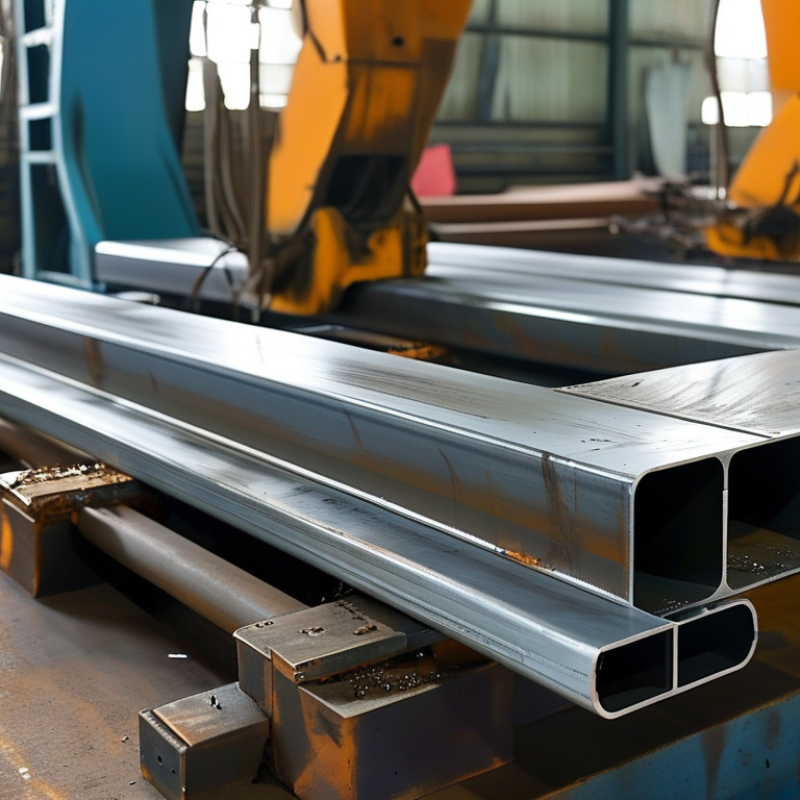
What Is a Square Pipe Making Machine?
A square pipe making machine forms flat steel strip into hollow, four-sided sections with consistent dimensions. The process usually begins with an uncoiler, which feeds the strip at a controlled speed. Roller stations gradually bend the material into a round shape. A high-frequency welding unit then joins the edges continuously. Forming rolls reshape the tube into a square or rectangular profile.
It is a precise process. Small alignment errors can create twisted corners, uneven welds, or unstable dimensions. After welding, sizing rolls correct the profile and improve its surface appearance.
A cutting system produces fixed lengths without stopping production. Experienced operators also check strip thickness, weld temperature, roll pressure, and cooling conditions during each shift. These details affect strength and production stability.
For 2026, the best machine should match the required pipe range, steel grade, wall thickness, and output target. Automation can reduce adjustment time, but it cannot replace skilled inspection. I have seen production plans fail because the selected machine handled width, not thickness, correctly. That assumption can be costly. A reliable machine needs rigid construction, accurate roll alignment, accessible maintenance points, and documented safety controls. Noise, vibration, and material waste deserve attention too. No machine is perfect. Even advanced equipment may need manual correction when raw material quality changes.
How Does a Square Pipe Making Machine Work?
What Is the Best Square Pipe Making Machine in 2026?
How Does a Square Pipe Making Machine Work?
A square pipe making machine forms metal strip into a precise hollow section. The process usually starts with coil unwinding, leveling, and controlled feeding. Forming rollers gradually bend the flat strip into a round tube. Additional rollers shape it into a square or rectangular profile. A high-frequency welding unit then joins the edges with focused heat. After welding, sizing rollers correct the dimensions and improve corner accuracy. A flying saw cuts the continuous pipe into programmed lengths.
In practical production, roller alignment strongly affects weld quality and surface appearance. Experienced operators check strip tension, coolant flow, and cutting accuracy during every shift. Small deviations can create twisted pipes or uneven corners. The machine is reliable, but it is not completely automatic. Material thickness, steel grade, and forming speed must work together. A faster setting may reduce output quality. That trade-off deserves careful review.
Tips: Inspect rollers before production. Keep the welding area clean and stable. Measure pipe dimensions with calibrated tools. Record defects instead of adjusting blindly. Some errors seem minor at first. They may become costly later. Manufacturers should also test several speed settings, because the ideal setup often depends on the material, not only the machine’s rated capacity.
What Is the Best Square Pipe Making Machine in 2026?
The best machine depends on required tube size, wall thickness, production speed, weld quality, and changeover needs. The chart below shows how line speed and tube geometry affect theoretical steel throughput.
How it works: Steel strip is uncoiled and leveled, gradually roll-formed into a round or square shape, high-frequency welded, sized through finishing rolls, and cut to the required length. Theoretical throughput is calculated from tube cross-sectional area, steel density of approximately 7,850 kg/m³, and line speed. Actual output is lower because of welding limits, setup time, trimming, and production stoppages.
How to Compare Square Pipe Machine Performance and Cost?
Choosing the best square pipe making machine in 2026 requires more than comparing advertised line speed. Measure usable output, weld stability, dimensional accuracy, and changeover time. A machine producing 80 meters per minute may lose its advantage if tooling changes take two hours. Request production trials using your actual steel grade, thickness, and square sizes.
Energy and material loss also deserve close attention. The International Energy Agency reports that steel production creates around 7% to 9% of global energy-related carbon emissions. This makes power consumption a practical cost indicator, not merely an environmental concern. Record kilowatt-hours per tonne, scrap percentage, and compressed-air demand during a full shift.
The World Steel Association reported global crude steel production of about 1.89 billion tonnes in 2023, showing how small efficiency differences can become significant at industrial scale.
Calculate total cost of ownership over five to ten years. Include tooling, maintenance, operator training, downtime, spare parts, and expected scrap. ISO 22400 performance principles can support measurements such as availability, performance, and quality.
Keep the calculation honest. Supplier data is often collected under ideal conditions. Real factories have coil variation, brief stoppages, and imperfect adjustments. I would also test recovery after a weld break. That detail is easy to overlook. A cheaper machine may become expensive when every restart requires manual alignment and produces several meters of defective pipe.
How to Choose the Right Square Pipe Making Machine?
The best square pipe making machine in 2026 is not automatically the fastest one. It should match your steel grade, tube dimensions, output target, and floor space. Start with the finished pipe, not the machine brochure. Measure wall thickness, corner radius, length tolerance, and surface requirements. A clear production profile prevents expensive overcapacity. That mistake happens often.
During equipment selection, request a sample run using your actual steel coil. Check forming stability, weld consistency, sizing accuracy, and cutting performance. Ask for production data at different speeds, not only the highest advertised speed. Inspect the decoiler, forming stands, welding unit, sizing section, and cut-off system. Servo control can improve repeatability, but it cannot repair poor tooling or weak maintenance practices. Design matters more than slogans.
Also examine the details operators handle every day. Can they change sizes without unsafe shortcuts? Are guards, emergency stops, sensors, and electrical systems suitable for local requirements? Check access to bearings, weld components, cooling lines, and lubrication points. Ask how quickly common spare parts can arrive. A machine may look efficient until one small sensor stops the line. Remote diagnostics help, but trained technicians still matter. Buyers sometimes focus too heavily on automation and ignore noise, heat, training, and cleaning time. That is a costly blind spot.