
Choosing the right Machine Safety Fence begins with understanding the machine, not browsing attractive panels. A fence must match the robot’s reach, stored energy, access points, production rhythm, and maintenance needs. A bright yellow mesh enclosure may look reassuring, yet poor gate placement can create daily frustration. Workers may then bypass it. That is a real failure.
Fred A. Manuele, a respected safety engineer and author, stated, “Risk assessment must precede risk reduction.” This principle belongs at the center of every Machine Safety Fence decision. Measure the hazard zone carefully. Check where an operator stands, reaches, cleans, and resets equipment. Consider falling parts, noise, visibility, emergency access, and the space required for tools. Small gaps matter. A swinging gate can also become an obstruction during maintenance.
The strongest solution is rarely the most expensive one. It is the solution that controls access without slowing legitimate work. Fixed panels, interlocked doors, sliding gates, and transparent sections each serve different conditions. However, no fence can replace proper safeguarding design, inspection, training, and documented risk review. That point is sometimes overlooked.
There is no perfect fence.
A practical selection process should compare safety performance, durability, installation time, future expansion, and cleaning requirements. Stainless steel may suit corrosive environments, while coated steel often fits general factory floors. Still, assumptions can fail. A design that works beside one press may be unsuitable near another. Verify dimensions on site, involve the people who use the machine, and review the arrangement after installation. The right Machine Safety Fence protects people while supporting reliable production.
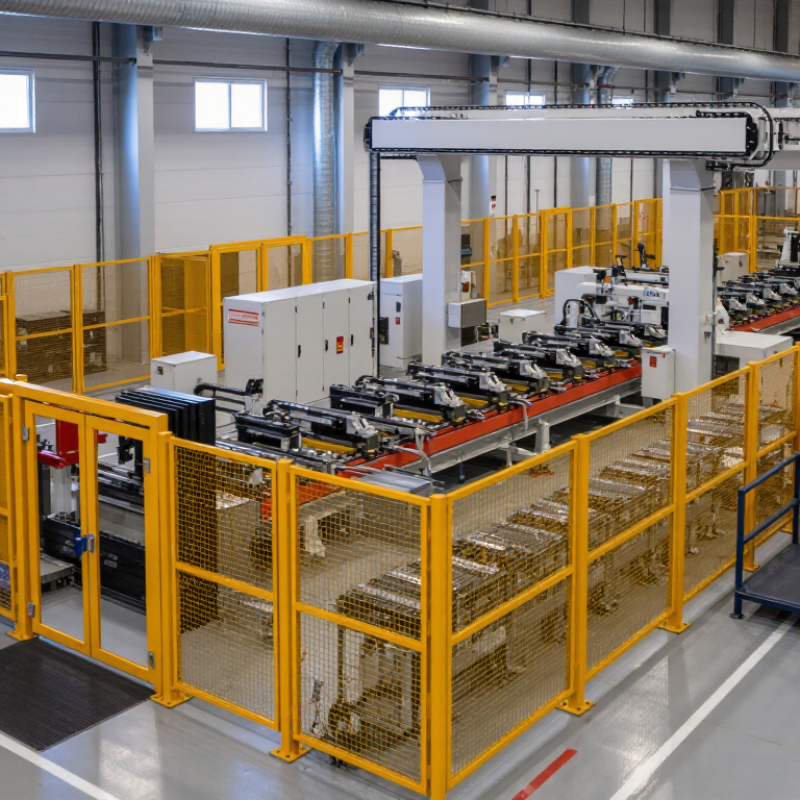
Choosing a machine safety fence should begin with the hazards around the machine, not the fence dimensions. Watch the full work cycle: loading, unloading, cleaning, adjustment, and fault recovery. A rotating shaft may be guarded, while a nearby pinch point remains exposed. That gap matters.
OSHA’s Fiscal Year 2024 enforcement data recorded 1,370 machine-guarding violations. The figure shows a persistent workplace risk, not merely a compliance issue. Identify where hands, clothing, tools, or materials can enter danger zones. Measure stopping distances, access frequency, visibility needs, and maintenance routes. ISO 12100 recommends assessing hazards throughout the machine’s lifecycle, including foreseeable misuse. A fence that blocks production access may encourage unsafe bypassing.
Walk the area with operators and maintenance staff. Ask where they step during jams. Look for footprints, worn paint, improvised openings, and doors left unsecured. These details often reveal the real exposure better than drawings. A risk assessment can still miss a hazard. Mine once did, because the analysis focused on normal operation and ignored a sensor reset position. That assumption was wrong. Include interlocked gates, suitable mesh openings, and a controlled access process. Consider impact energy and the possibility of objects being ejected. The safest layout is not always the neatest one. Reference: OSHA, FY2024 Top 10 Frequently Cited Standards; ISO 12100:2010.
Before selecting a machine safety fence, identify the hazards that can reach operators, maintenance personnel, or visitors. This example rates common machine hazards on a 1–5 risk scale, considering potential injury severity, exposure, and the likelihood of contact. Higher scores indicate the need for more robust guarding, controlled access, and additional safety measures such as interlocked gates or presence-sensing devices.
Before selecting a machine safety fence, identify the laws and standards governing your site. Requirements differ by country, industry, machine type, and worker exposure. In the United States, employers may need to consider OSHA guarding rules and recognized consensus standards. In Europe, machinery requirements may involve the applicable Machinery Regulation and harmonized standards. Local requirements should be confirmed with a qualified safety professional.
Use ISO 12100 to structure the machine risk assessment. It helps identify crushing, shearing, entanglement, and unexpected start-up hazards. ISO 14120 can guide guard design, while ISO 14119 applies when interlocking devices are used.
The fence must match the hazard, not merely surround the equipment. Check opening sizes, reach distances, impact resistance, access points, and emergency escape needs. Measure the actual machine, including moving parts and maintenance zones.
A practical inspection should include a tape measure, drawings, and conversations with operators. A small gap near a conveyor can create a serious reach-through risk. A poorly positioned gate may encourage workers to bypass it. That detail is easy to miss.
Document the risk assessment, selected controls, inspection intervals, and training requirements. Legal compliance is not proven by a certificate alone. It depends on installation, maintenance, and daily use. Even experienced teams should review their assumptions after installation.
Start by setting the fence height from the hazard, not from convenience. A risk assessment should consider reaching over, climbing, and falling objects. Measure the tallest reachable point near the machine. Then add a suitable safety margin. A low fence may look tidy, but it can leave dangerous moving parts exposed. Do not guess.
Fence distance controls how easily someone can reach through or around the barrier. Check every opening, panel joint, and gap beneath the fence. Use reach-distance guidance from applicable safety standards during the design review. Leave enough space for tools, cleaning, and normal maintenance. A fence placed too close can create a second hazard during servicing.
Access points need practical planning. Place gates where operators naturally load materials or inspect equipment. Maintenance doors should open fully without striking nearby structures. Emergency exits must remain visible and unobstructed. Use monitored interlocking devices where access could expose a person to motion. Keep handles between comfortable waist and shoulder height. Small details matter.
In one equipment review, the gate was technically compliant but awkward to reach. Operators began leaving it open. That weakness was not obvious on the drawing. Walk around the finished layout before approval. Test the gate with gloves, tools, and limited visibility. A design can meet measurements and still fail in daily use.
Material choice should follow the hazard, not appearance. Welded steel mesh suits impact-prone areas and offers strong airflow. Polycarbonate panels provide clearer visibility and contain small fragments. Aluminum is lighter, but it may need reinforcement near moving equipment. OSHA’s FY2023 Top 10 data listed 1,644 machine-guarding violations, showing that basic protection remains frequently overlooked.
Design affects daily behavior. Fixed panels work well around rarely accessed zones. Hinged or sliding sections support maintenance, but access points need reliable interlocking systems. A fence that slows production may be bypassed. That is a real design failure.
ISO 14120 emphasizes suitable construction, secure fixing, and safe access for guards. Visibility also matters. Open mesh helps operators observe status lights and material flow. Transparent panels improve inspection, though glare, dust, and scratches can reduce their value.
Tips: Measure the largest maintenance tool before selecting door width. Keep the fence outside the robot’s reachable envelope. Check sightlines from normal operator positions. Use contrasting floor markings near gates. Review the fence after three months of use, because clean drawings cannot predict every shortcut. A 2023 Bureau of Labor Statistics report recorded 5,283 fatal work injuries in the United States. That figure does not prove a fence prevented each incident, but it supports careful, evidence-based guarding decisions.
Choosing a machine safety fence is only half the decision. The harder question is whether it can be installed, inspected, and maintained correctly. An experienced installer checks the floor, access points, moving parts, and emergency routes before drilling. A fence should not block controls or create a hidden gap near a conveyor. Measure twice. This habit prevents expensive corrections later. Installation records should show anchor locations, gate positions, fastener types, and approval responsibility.
After installation, inspect every panel, post, door, latch, and interlock connection. Look for loose anchors, sharp edges, bent mesh, corrosion, and openings changed by machine adjustments. Test each access gate under normal operating conditions, not only during shutdown. The stop function should respond as intended, and restarting should require the expected reset action. Use a checklist with dates, photographs, findings, and corrective actions. A second reviewer may notice what the installer overlooks.
Maintenance frequency should reflect use, dust, vibration, and impact risk. High-traffic gates may need weekly checks, while quieter areas still require scheduled reviews. Clean hinges and inspect fasteners without defeating protective devices. Replace damaged parts promptly. Do not improvise with wire or temporary ties. That shortcut is easy to regret. No checklist is perfect. Cable routes, tooling, or machine settings may change after approval. Assign a responsible person, train replacement staff, and review the fence after every modification. A careful record shows whether protection remains dependable.
880 W 9th Street
Upland, California 91786
884 W 9th Street
Upland, California 91786
886 W 9th Street
Upland, California 91786
884 W 9th Street
Upland, California 91786