
Choosing the right Flux Core Welder begins with the work, not the machine’s advertising claims. A weekend repair on a steel gate needs different capabilities than repeated fabrication on thick structural parts. Material thickness, joint position, available power, and expected workload should guide the decision.
I have seen beginners focus on amperage alone. That approach often disappoints. A welder rated for high output may still struggle with unstable wire feeding or a short duty cycle. Check the recommended wire diameter, voltage range, spool capacity, and duty cycle. A clear control panel also matters when gloves, dust, and poor lighting are involved. Small details count.
Portability can change everything. A compact unit may fit beside a pickup truck, while a heavier model can provide steadier output in a workshop. Gasless flux-cored wire handles outdoor drafts better than gas-shielded processes, but it creates more smoke, slag, and cleanup. Ventilation remains essential. Always follow the manufacturer’s instructions and use suitable eye, hand, and respiratory protection.
The cheapest option is not always economical. I learned that after replacing a worn liner and inconsistent contact tip sooner than expected. Still, expensive equipment does not guarantee better results. Compare reliable specifications, warranty support, replacement parts, and real user feedback. Think about your current projects, but leave room for skill growth. The right Flux Core Welder should feel manageable today and useful months later. Mistakes are part of learning. Good equipment should make them easier to understand, not harder to correct.
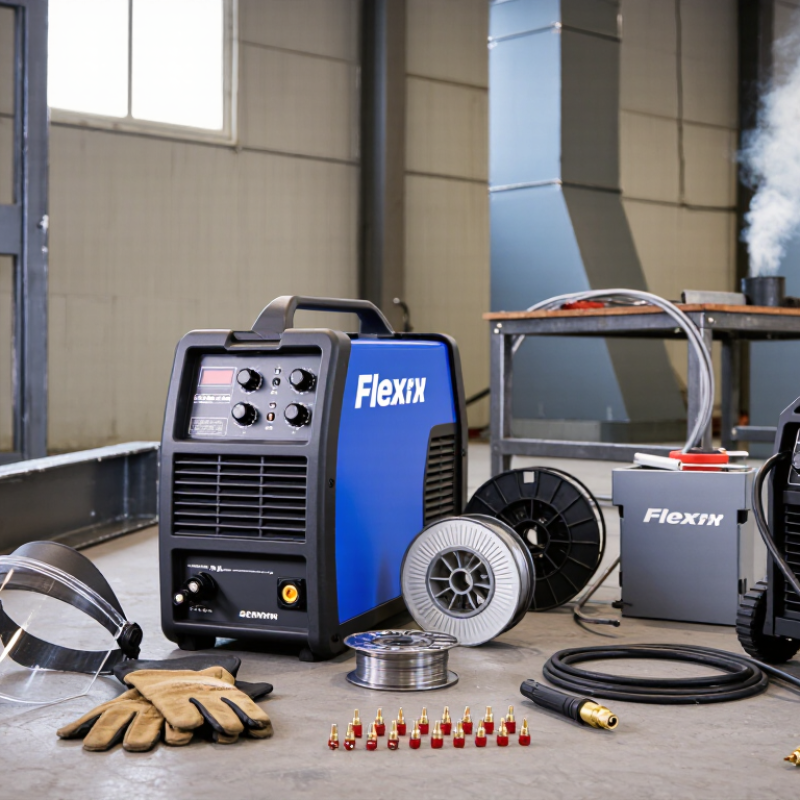
Before choosing a flux core welder, define exactly what you will weld. Consider material type, thickness, joint design, and welding position. For light repairs on 3–6 mm steel, moderate amperage may be enough. Thicker plate requires greater output and a suitable duty cycle. Outdoor work also changes the decision. Wind can disturb shielding, even with flux-cored wire. You may need a machine with stable arc control and enough power for longer welds. Watch the duty cycle carefully. A compact welder may perform well briefly, then need cooling time. That assumption matters.
Your power supply is another practical requirement. Check available voltage, circuit capacity, and extension-cord length before buying. A machine that exceeds your circuit can cause nuisance trips or unsafe heating. Select wire diameter according to the steel thickness and expected weld size. Larger wire can improve deposition, but it may require higher current and better control. I recommend testing settings on scrap steel first. Run short beads, inspect penetration, and adjust travel speed. Poor results may come from technique, not equipment. Keep the workpiece clean and dry. Use suitable eye, hand, and body protection, and provide adequate ventilation for welding fumes. My first setup used too much wire speed, creating a rough, crowded bead. That mistake reminded me to record settings and change one variable at a time.
| Requirement | Typical Welding Need | Recommended Welder Specification | Why It Matters |
|---|---|---|---|
| Primary flux core process | Outdoor repairs, structural maintenance, or general fabrication | Choose a machine that supports self-shielded FCAW; add gas-shielded FCAW capability if cleaner welds and indoor work are also required. | Self-shielded wire is less affected by wind, while gas-shielded wire can provide a cleaner arc in controlled indoor conditions. |
| Material type | Mild or low-alloy steel | Use a welder rated for steel wire and compatible with the selected flux-cored wire classification. | Flux-cored wires are formulated for specific base metals, strength levels, positions, and shielding conditions. |
| Material thickness | Thin sheet, approximately 1.6–3 mm | Select a machine with stable low-current control, commonly around 30–90 A, and support for small-diameter wire. | Low-current stability helps reduce burn-through and improves control on thinner steel. |
| Material thickness | Medium plate, approximately 3–6 mm | Look for an output range of roughly 120–180 A and adjustable voltage or wire-feed settings. | Adequate output supports sound fusion without requiring excessive travel speed. |
| Material thickness | Heavy plate above 6 mm or multipass work | Consider a machine capable of approximately 200–300 A, with sufficient duty cycle and multipass welding guidance. | Heavier sections often require higher heat input, multiple passes, preheating, or joint preparation. |
| Wire diameter | Light fabrication and thinner steel | Support approximately 0.8–0.9 mm flux-cored wire. | Smaller wire generally allows lower operating current and finer control. |
| Wire diameter | General fabrication and thicker steel | Support approximately 1.0–1.2 mm flux-cored wire, provided the drive system is rated for it. | Larger wire can deposit more metal but normally requires higher current and suitable feed components. |
| Power supply | Home workshop or light repair | A 120 V input model is suitable for lighter work when the circuit has adequate capacity and protection. | Lower-voltage machines are convenient but may have reduced maximum output and slower performance on thick steel. |
| Power supply | Frequent fabrication or heavy-duty work | A 230 V input model generally provides greater output capacity and better suitability for extended high-current welding. | Higher input voltage can support higher welding output, subject to the electrical installation and machine rating. |
| Duty cycle | Occasional repairs | A duty cycle around 20–30% at the intended operating current may be adequate. | This allows welding for part of a standard 10-minute test period before a cooling interval is required. |
| Duty cycle | Production or long welds | Prefer approximately 40–60% or higher at the current you expect to use. | A higher duty cycle reduces thermal shutdowns and improves workflow consistency. |
| Polarity control | Switching between different self-shielded wires | Choose a machine with clearly marked polarity connections and the polarity range required by the wire manufacturer. | Incorrect polarity can cause excessive spatter, unstable arc performance, and poor bead appearance. |
| Wire-feed system | Reliable feeding of soft or knurled flux-cored wire | Look for adjustable drive-roll pressure, compatible drive rolls, a quality liner, and a spool size suited to the job. | Correct feeding reduces bird-nesting, inconsistent arc starts, and wire deformation. |
| Portability | Field repairs and mobile maintenance | Prioritize compact dimensions, manageable weight, a robust handle, and sufficient cable length. | A portable setup makes it easier to position the welder near the workpiece and power source. |
| Safety and usability | Regular home or workshop use | Require thermal overload protection, clear controls, proper grounding provisions, and compatibility with an approved welding helmet and protective equipment. | Electrical protection, correct setup, ventilation, and personal protective equipment are essential for safe flux core welding. |
Selection note: Confirm the welder’s rated output, duty cycle, input requirements, wire compatibility, and polarity settings against the wire manufacturer’s technical data and applicable local electrical and safety requirements.