
Fuse Holders rarely attract attention until a circuit needs reliable protection. Yet they sit inside equipment used in vehicles, factories, renewable-energy systems, and power distribution. For global buyers, choosing a supplier involves more than comparing unit prices. Product specifications, manufacturing consistency, documentation, and communication all matter.
The International Energy Agency’s Global EV Outlook 2024 estimated that electric-car sales would approach 17 million that year, representing more than one in five cars sold worldwide. Its Renewables 2024 report projected nearly 5,500 gigawatts of new renewable power capacity between 2024 and 2030. These figures do not measure Fuse Holder demand directly. They do, however, show why dependable electrical components matter across expanding applications. Small parts. Serious consequences.
China’s supplier base offers buyers a broad range of designs, materials, and production capabilities. But a polished catalog is not proof of dependable performance. Buyers should check ratings, compatible fuse dimensions, temperature limits, test records, and traceable quality procedures. They should also confirm whether samples match production units. That detail is easy to overlook.
This guide examines how global buyers can evaluate China’s top Fuse Holder suppliers, compare their technical strengths, and ask sharper questions before ordering. It also recognizes a limitation: supplier claims can be difficult to compare when test conditions differ. A careful shortlist helps, but it cannot replace independent verification for critical applications.
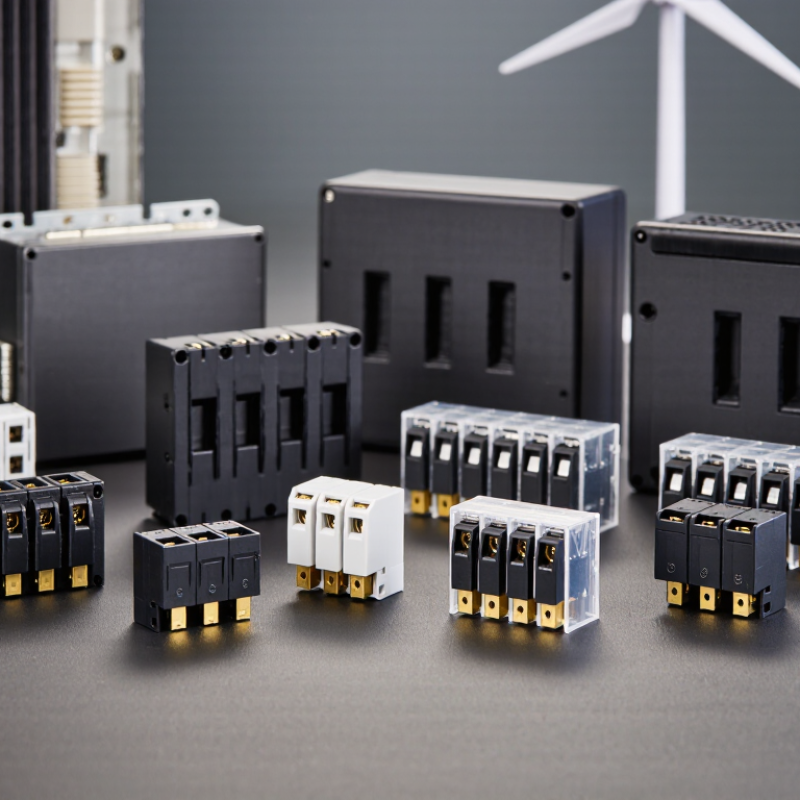
A fuse holder keeps a fuse secure and connects it to an electrical circuit. The fuse responds to excessive current; the holder provides the contact path and physical support. Common designs accommodate cartridge, blade, or panel-mounted fuses. A loose terminal can create resistance and heat, even when the fuse rating is correct. Small details matter.
When selecting a holder, match its rated current and voltage to the application, and confirm the fuse size and type. Consider operating temperature, vibration, moisture exposure, and available space. Inspect terminal materials and wire connections, too. A holder’s appearance alone cannot confirm its performance. For global buyers comparing suppliers, request clear drawings and test information, then verify that the documents match the exact part. I would not assume a familiar-looking design is interchangeable.
Tips: Check for a secure fit and clean contacts during maintenance. Follow the specified installation torque. If a holder feels warm or shows discoloration, investigate the connection before replacing parts. Real installations can be messier than a catalog suggests.
China’s fuse-holder range usually includes panel-mount, inline, PCB, and DIN-rail designs. Panel-mount holders fit through a drilled enclosure opening, with a threaded body and front cap for service access. They suit control panels where technicians need to replace a fuse without opening the full cabinet. Check the panel thickness and cutout dimensions before ordering.
Inline holders place the fuse inside a cable assembly, often under a protective cover. They are useful in compact wiring runs, but wire gauge, sealing, and strain relief matter. PCB holders solder directly to a circuit board and come in clips or enclosed formats. Confirm the fuse size, pin layout, and board clearance; a small mismatch can prevent assembly. DIN-rail fuse holders help organize industrial control cabinets and may include touch-safe covers or indicator features. Fit matters. Across all types, compare rated voltage and current, terminal style, operating temperature, and compatible fuse dimensions against the actual application. Ask suppliers for current datasheets and sample parts, then inspect markings and terminal retention. Catalog descriptions can be brief, and that is not always enough. A sample check may take extra time, but it can reveal details missed in a drawing.
| Fuse Holder Type | Typical Mounting | Common Fuse Format | Typical Electrical Range* | Common Applications | Key Selection Considerations |
|---|---|---|---|---|---|
| PCB fuse clip or holder | Through-hole or surface-mount PCB | Cartridge fuses, commonly 5 × 20 mm or 6.3 × 32 mm | Often up to 250 V AC; current capacity depends on the fuse, contacts, and holder design | Power supplies, control boards, consumer and industrial electronics | Check fuse dimensions, PCB footprint, contact material, temperature rise, and soldering method. |
| Panel-mount cartridge fuse holder | Panel or equipment enclosure | Cartridge fuses, commonly 5 × 20 mm or 6.3 × 32 mm | Common versions are rated up to 250 V AC; current ratings vary by model | Control panels, instruments, appliances, and power equipment | Confirm panel cutout, accessible cap style, voltage rating, insulation, and required ingress protection. |
| Inline fuse holder | Installed in series with a wire harness | Cartridge, blade, or other specified fuse formats | Varies widely by wire gauge, fuse format, and construction; low-voltage DC models are common | Automotive wiring, battery circuits, and low-voltage equipment | Match the holder to the fuse and conductor size; check sealing, strain relief, and operating environment. |
| Automotive blade fuse holder | In-line wiring or fuse block | Standard, mini, or other automotive blade fuses | Commonly used in 12 V and 24 V DC systems; allowable current depends on the holder and wiring | Vehicles, marine accessories, and mobile electrical systems | Verify blade-fuse size, circuit voltage, wire gauge, terminal retention, and resistance to vibration. |
| DIN-rail fuse holder or fuse disconnect terminal | 35 mm DIN rail or modular control-panel assembly | Cartridge fuses or specified cylindrical industrial fuse links | Model-dependent; industrial designs may be rated for several hundred volts AC and currents from a few amperes upward | Industrial control cabinets, distribution panels, and machinery | Check fuse size, pole configuration, rated voltage, conductor range, and compatibility with the selected fuse class. |
| Photovoltaic (PV) fuse holder | PV combiner box or DC distribution enclosure | PV cylindrical fuse links, often 10 × 38 mm; other formats are available | Some models are designed for 1,000 V or 1,500 V DC systems; ratings must match the specific fuse and system | Solar string protection and photovoltaic combiner equipment | Confirm DC voltage rating, fuse-link compatibility, temperature range, polarity requirements, and enclosure conditions. |
| High-current bolted fuse holder | Busbar, chassis, or equipment panel | Bolted industrial or automotive fuse links | Designed for higher-current circuits; the permissible rating depends on the fuse, mounting, and connection design | Battery systems, power converters, and heavy-duty electrical equipment | Check bolt pattern, busbar dimensions, contact pressure, fault-current requirements, and thermal performance. |
*Electrical ranges are indicative examples, not universal specifications. Confirm the holder’s datasheet and applicable safety approvals, and ensure that the holder, fuse, wiring, and system voltage are compatible.
When evaluating China-based fuse holder manufacturers, start with the technical evidence, not the catalogue photographs. Check rated voltage and current, compatible fuse dimensions, contact material, and operating temperature. A capable supplier should provide clear drawings and test records for the specific model. Ask how electrical and temperature tests are performed. Details matter.
Review production consistency as well as product samples. Request samples from a regular production run, then inspect terminal fit, molded edges, and marking legibility. Ask how materials and batches are traced if a defect is found. A factory visit or live video call can show assembly steps and inspection equipment, but neither proves every process is reliable. Follow up with records. Compare answers with the documents.
Communication is part of the evaluation. Note whether engineers answer technical questions directly or keep redirecting them to sales staff. Confirm lead times, packaging, and how design changes are approved. A very low quotation deserves careful questions about materials and testing, not an automatic rejection. No checklist catches everything. Even a detailed review can miss a weak point, so record assumptions and revisit them after pilot orders.
Certifications, customization, and export readiness are practical ways to assess fuse holder suppliers. Ask for current certificates and test reports, then check that the product ratings and test scope match your application. IEC 60269 covers low-voltage fuses; the applicable requirements for a holder may depend on its design and destination market. A certificate alone does not confirm suitability for every installation. Small details matter.
Customization should begin with clear operating requirements: rated current and voltage, mounting style, terminal type, housing material, and expected temperature range. Request drawings and a sample for fit checks before approving production. Even a careful specification can miss a real cabinet constraint; that gap deserves attention. For exports, confirm lead times, packaging, traceability, and the supplier’s ability to provide commercial documents and test records. The WTO’s Global Trade Outlook and Statistics 2024 reported a 1.2% decline in world merchandise trade volume in 2023, a reminder that delivery planning matters.
Tips: Share a marked-up drawing and target-market requirements early. Ask who verifies revisions, and how changes are recorded. A neat datasheet helps, but a sample fit check often reveals what paper misses.
Global buyers should compare fuse holder suppliers against the same written specification, not just catalog photos. Check rated voltage and current, fuse format, mounting dimensions, terminal style, and operating-temperature range. Small mismatches matter. A holder that fits the panel may still run hot under the actual load. Request test data for temperature rise, contact resistance, and dielectric performance, then confirm the tested configuration matches the offered part.
Review quality controls as carefully as the product. Ask how incoming materials are checked, how production lots are identified, and whether inspection records can be linked to shipments. Useful evidence includes current certificates, test reports, change-control procedures, and clear warranty terms. Verify that documents cover the exact model and destination market; generic PDFs are not enough. If samples are available, inspect terminal fit, molding finish, and labeling, then trial them in a representative assembly. One sample is only a clue.
Compare lead times, minimum order quantities, packaging, and the supplier’s response to technical questions. Ask for written answers on tooling ownership, engineering changes, and defect handling before placing a large order. A fast quote helps, but a precise answer is better. Check the details. Buyers can overvalue paperwork and overlook communication after the first shipment. Keep a scorecard, document unresolved risks, and speak with the quality or engineering contact, not only sales. The best partner is not always the cheapest; it is the one whose evidence, capacity, and follow-through fit your application.
880 W 9th Street
Upland, California 91786
884 W 9th Street
Upland, California 91786
886 W 9th Street
Upland, California 91786
884 W 9th Street
Upland, California 91786